
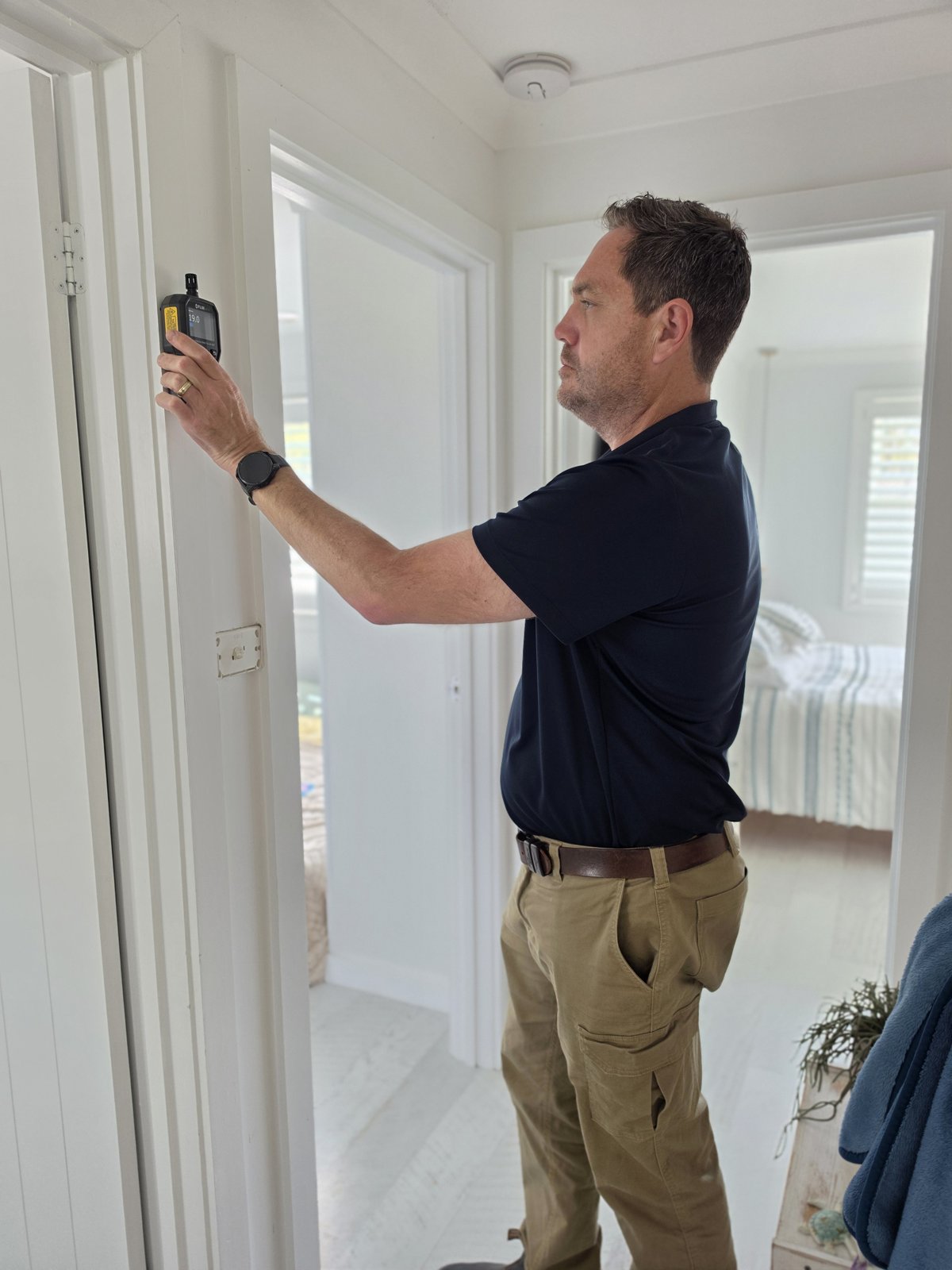
Termites are often called the silent destroyer, and for good reason. They work hidden inside walls, floors and roof timbers, and many homeowners don't know they have a problem until the damage is significant. Sydney's climate, established gardens and bushland make termites a real risk across the Northern Beaches, North Shore, Hills District, Eastern Suburbs and beyond. Knowing the warning signs can help you catch activity early.
1. Mud leads on walls, piers or foundations
Subterranean termites build mud tubes, also called mud leads or shelter tubes, to travel between the soil and the timber they're feeding on. Look for thin, pencil-width tracks of dirt running up brickwork, concrete slabs, piers, fence posts or the inside of garages and subfloors.
2. Hollow-sounding or damaged timber
Termites eat timber from the inside out, often leaving a thin outer layer intact. Tap skirting boards, door frames and window frames. If they sound hollow or papery, or your finger pushes through easily, it's worth getting them checked.
3. Bubbling or cracked paint
Paint that bubbles, blisters or looks water-damaged on timber surfaces can be a sign of termites working underneath, as they bring moisture with them.
4. Doors and windows that suddenly stick
As termites damage and add moisture to frames, timber can warp. Doors and windows that become hard to open or close without an obvious reason should be investigated.
5. Sagging floors or ceilings
Floors that feel soft or springy, or ceilings that sag or show cracks, can indicate damage to the supporting timbers.
6. Discarded wings or swarms
In warm, humid weather, often around spring and early summer, winged termites called alates leave established colonies to start new ones. Small piles of discarded wings near windowsills, doors or light fittings are a strong sign there's a colony nearby.
7. Mud in unusual places
Termites patch holes with mud. Small spots of dirt packed into cracks in plaster, around architraves or at the base of walls can be a giveaway.
What increases the risk?
- Timber in contact with soil, such as garden beds, sleepers and fence posts
- Leaking taps, hot water overflows and air-conditioning drains that keep soil damp
- Garden beds or mulch built up against the house, covering weep holes
- Poor subfloor ventilation
- Old tree stumps close to the home
What to do if you suspect termites
Don't disturb them. Breaking open mud leads or spraying surface insecticide can cause termites to move to another part of the house, making them harder to find and treat. Instead, leave the area as it is and book a professional inspection.
Why regular inspections matter
Because termites are so hard to spot, Australian Standards recommend termite inspections at least every 12 months, and more often in high-risk areas. A visual termite inspection from Apex uses thermal imaging and moisture meters to detect activity behind walls without causing damage, and you'll receive a report with findings and recommendations. If termites are found, treatment options can include baiting systems, chemical barriers and physical or hybrid barriers, depending on the property.
Book a termite inspection
If you've noticed any of these warning signs, or it's been more than a year since your last inspection, contact Apex Professional Pest Management on 0458 454 626 or learn more about our termite inspection and treatment services.